I want to bring to your mind a saying, “You can’t pour from an empty cup.”
That’s true, but it’s also incomplete. When my cup is full, I don’t just have more capacity and capability to help; I’m also standing at a moral and spiritual crossroads. Do I use that fullness to withdraw into my own comfort, or to help hold what others can’t carry alone?
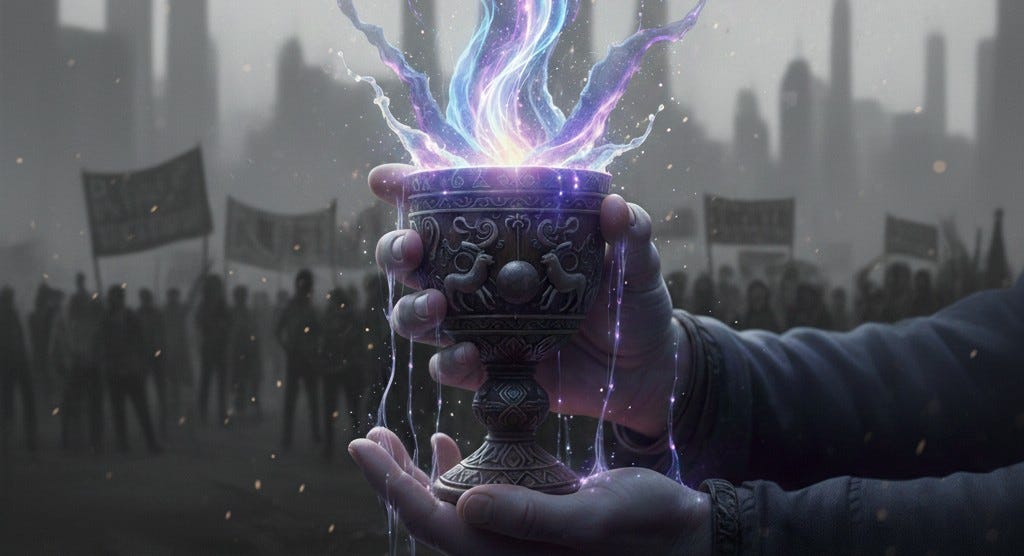
During social and political unrest, there’s a real threshold where “self‑care” can quietly turn into avoidance. If too many of us stay focused only on keeping our cup full, the people closest to the fire end up absorbing most of the risk, exhaustion, and harm.
Historically, in times of war, disaster, and collective trauma, spirituality doesn’t just move inward. It also has to move outward. People turn to something bigger than themselves not only for meaning and peace, but to:
Organize mutual aid and material support
Hold grief, rage, and fear in community
Sustain movements for justice over the long haul
In that light, a “full cup” isn’t the finish line. It’s the ground where we can evolve our question from:
“How do I protect my peace?”
to
“What am I resourced enough to help hold, so others don’t have to hold it alone?”
Personal serenity still matters. After all it keeps us from burning out or becoming another crisis someone else has to manage. But in the calamity of our times, the deeper call of a filling (or holding) a full cup is shared resilience: turning our inner stability into sustained, impactful support for one another.
That’s where self‑care becomes solidarity. Be cautious of the gravity of a calm inner world that doesn't relate or share with the one just outside your skin.
A recharged battery is meant to power something, so choose what you want to pour that power into. ❤️