
Nearly everyone will lie when saying the truth out loud feels dangerous. It is that simple, but how they get there is complex and personal.
What I mean is, they rarely do it for no reason whatsoever. Many people, and I used to be one of them, don’t feel safe in their own skin. When feeling safe in your own body is unfamiliar, it won’t come naturally to assume others feel personally safe.
First what is “truth”. Truth is a property of thoughts or propositions, it is an agreement between a statement, belief, or idea that someone has and the actual state of the world. It is composed of facts, but is also the limited interpretation of someone’s experiences.
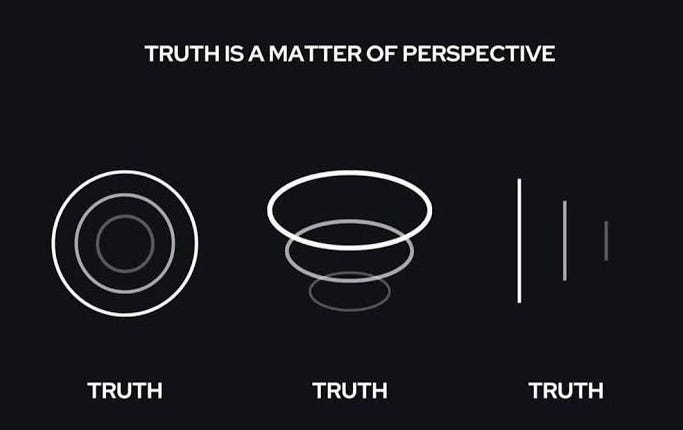
From a very early age, individuals find out what is safe to say to others and what isn’t. In some cases, they learn that honesty costs them comfort, relationships, or their place in the family or community. Maybe they divulge their truths in natural trust, and the responses they get strip them of their sense of control, or even jeopardize their survival. Truth, as the image shows, is a perspective of facts shaped by understanding.
Children instinctively tell the truth at first, then get punished for it. That is what starts the problem.
This might look like shame for getting it “wrong,” or humiliation, and being made to feel inferior until their own experiences become something they have to keep hidden. As a parent, we have to ask ourselves: do we want truth, respect, or to simply require our children to perform?
When they learn to keep quiet and hold their truth secret, they grow to distrust through observation. They witness family members say one thing and do another. They learn that consistency isn’t expected, that truth is negotiable, that pretending or masking (a form of lying) is the price of belonging. They may not understand why. Their body still learns the lesson that “it isn’t safe to be yourself”.
So the lies become a protection the mind builds to serve the body’s need for stability. An instinct to survive runs amok, maybe, but our bodies protect us.
I can understand how difficult it must be to see any of this at the time. If a person has realized that being themselves can be dangerous, they don’t calmly consider the lie and compare it to the truth. Instead, they quickly work out whether it is safe to be seen.
That is the goal, though. To be truly seen as you are, in your version of truth. Each of our experiences is unique and shapes how we discover ourselves. That fact doesn’t mean lying is harmless. Just because you understand it doesn’t mean you have to accept it, put up with it, or stay close to someone who keeps using it to hurt you; boundaries still matter, and so do the consequences.
However, it has changed my perception of the person carrying out the action, and that is what I want to draw your attention to now.
We are all more than our lies. None of us are simply “liars.” We are diligent protectors, reacting to fear, shame, insecurity, or an old rule that has shown us how to survive in an unsafe environment. Making the lie someone tells about the safety you suggest or validate.
Safety doesn’t lead directly to honesty, since this change doesn’t happen overnight; you must trust the environment to tell the truth, and trust yourself to get through what follows.
If you want to reduce the amount of lying you witness, then show curiosity and actually mean it.
Curiosity doesn’t mean pretending nothing happened, nor does it blur the boundary until it vanishes. It means asking ourselves why the lie seemed safer than the truth and then being willing to listen to an answer even if it’s one you don’t like. It also means leaving space for someone to state their version of the truth without immediately treating it like a trial.
That’s your opportunity to see the other person as they are, without the mask that protects them.