For years, “it is what it is” and “focus only on what you can control” sounded like surrender to me. Like I was being asked to stop caring. They got under my skin. I seldom had the words to explain why.
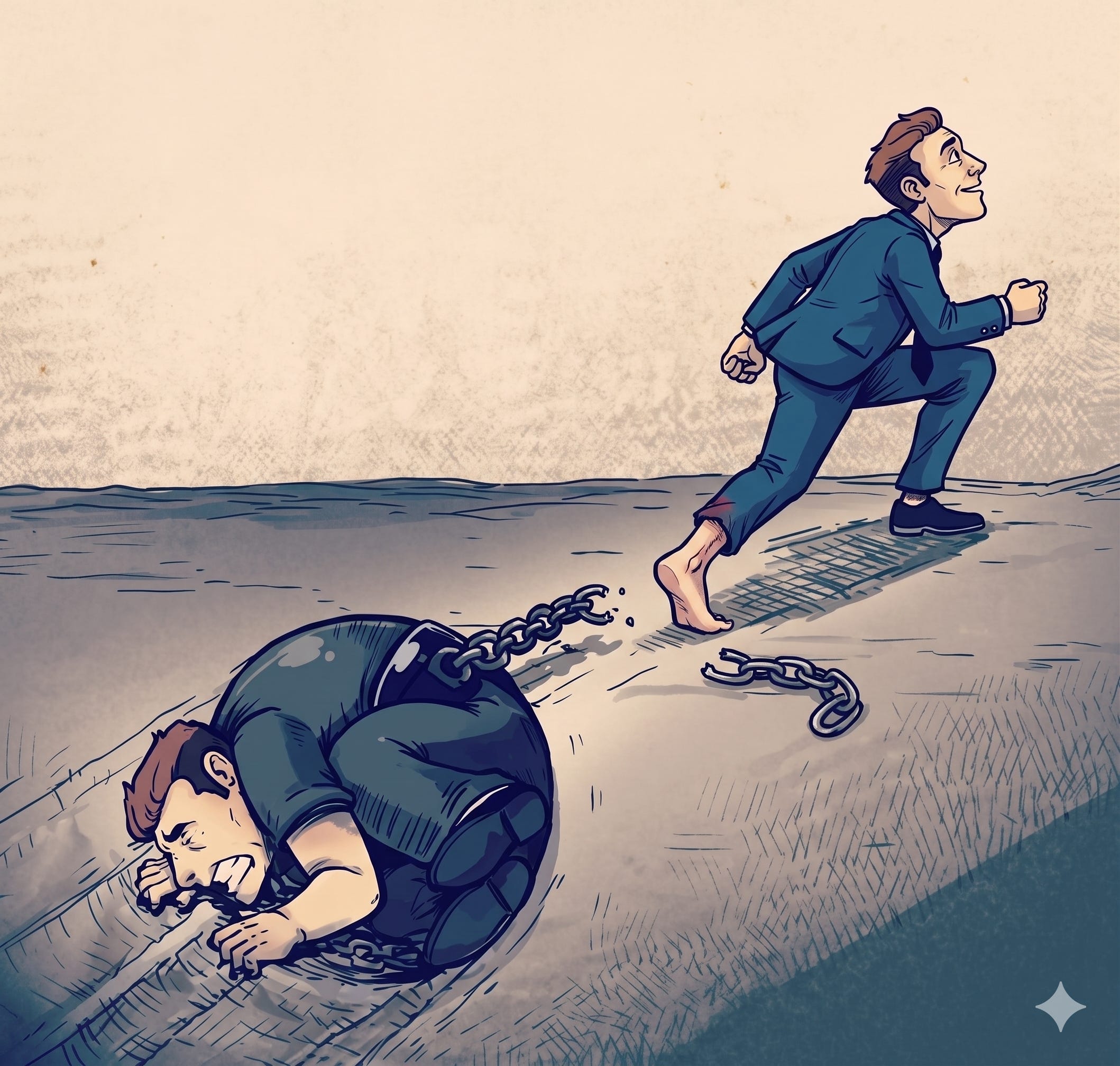
I assumed it was partly because of how they were said. Almost trance-like. As if the person saying them wasn’t quite aware they were speaking, just letting the words pass through on their way somewhere else.
What I didn’t understand then was that I was hearing those phrases through a filter. A filter I thought was compassion.
For a long time, I thought I knew what compassion meant. The dictionary version is clean enough: a feeling of deep sympathy and sorrow for another who is stricken by misfortune, accompanied by a strong desire to alleviate the suffering.
I carried all that sure enough. Beyond what was ever necessary.
When I saw suffering, I felt it. When I saw pain, I shared it. When I witnessed cruelty, loss, or injustice, it did not stay out there in the world. It came in. It moved me. It always has.
Being compassionate didn’t make me perfect, by any means. There were times when compassion was not my first step, or even my second.
But what I’ve started to see — only recently, and only because something else brought it to my attention — is that what I was calling compassion had something else mixed into it, making it feel heavy and icky. A fear of becoming indifferent. The fear that if I stopped being wrecked by every cruelty in the world, then maybe I was becoming cold. Maybe I was losing my humanity. Maybe peace itself was just another word for numbness.
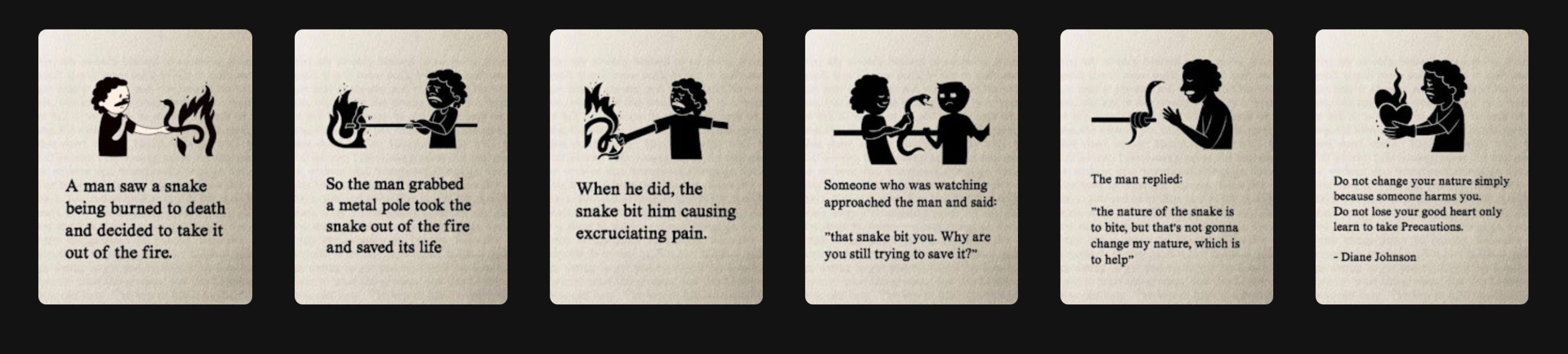
So I performed the wreckage. Not on purpose. But somewhere along the way, being overwhelmed had gotten tangled up with proof. Proof that I cared. Proof I hadn’t gone numb. Driving an over-indulgence to consume the pain of others, because surely understanding their experience, is where compassion would be proven?!
I think a lot of us were accidently taught this early. Through sayings like, “there are kids in Africa starving,” — said over a dinner plate, to a child who couldn’t have done anything about it even if they tried. The lesson underneath it wasn’t help them. The lesson was feel bad enough to count as good. Compassion as a small private suffering you owed the world.
How I saw suffering has changed inside me, before I had any drive to understand.
About a week ago I’d been listening to a lot of general news — over wars, genocide, gas prices, any current chaos somewhere far from here. And I noticed the old pull was there, the guilt, the sense that I should be more devastated than I was. But instead I felt steady. A non-dual awareness that didn’t argue with the suffering, or minimize it, but also wasn’t being pulled apart by it.
I tried to describe this, awareness, to my mom. Her response was a gentle version: “you shouldn’t worry about what you can’t change.”
She meant it in kindness. She was being compassionate in the way she knew how. And I realized — standing between her version of caring and the thing I was actually experiencing — that we were not in the same conversation. She was offering me a tool for managing overwhelm. I was trying to tell her the overwhelm was no longer a problem.
That was when I had the word.
Equanimity.
The mental or emotional stability or composure, especially under tension or strain; calmness; equilibrium.
From the outside, it can look like indifference. I know it can, because I’ve been read that way. The currents of the world move through me now and they do not change me, and to someone still inside the older pattern, that stillness can register as coldness. As bypassing. As not caring enough.
But equanimity feels nothing like indifference from the inside. It feels like standing in the middle of life without being torn apart by every current that moves through it. The winds still come. They move around me and through me. They just don’t get to rearrange me.
I’m not less tuned in. If anything, I’m more. I can finally see what’s happening without being consumed by it. To bear witness and see things as they truly are, does not require that I hold onto it.
The evidence of equanimity, for me, is inner peace. With compassion still present. Not unmoved, but unchanged.
Not because the world has become less painful. Not because suffering has disappeared. Not because I suddenly have answers to the hardest questions. But because I no longer believe caring about someone else’s pain has to take the form of my own suffering.
That weight was something I didn’t know I’d been carrying.
I had been holding compassion that was weaponized — pointed back at me, shaped into the shame of being unable to fix everything. Of being unable to stop all pain, all at once, for everyone. Anyone.
There’s an unspoken belief underneath a lot of other sensitive experiences in life: if you’re not overwhelmed, you’re not caring enough. It isn’t true. Being overwhelmed is not the proof of love. The proof is the ability to stay open without letting it change you. To witness suffering and still remain within your own center, as an Observer.
That, for me, is what awakening turned out to be.
Not an escape from being human. Not a denial of the pain of life. Not some elevated state where nothing matters anymore.
A deep integration. A realization that I can be fully human and still anchored in something beyond the turbulence. Allowing myself to feel grief, fear, sorrow, even helplessness, and not lose myself underneath any of it. I can feel those even more fully now than I have or can ever recall, yet also not find myself as a puddle on the floor.
Enlightened or Awakened is often tied to wisdom, and maybe wisdom isn’t about remaining unmoved. Maybe wisdom is the path of work you undergo to learn the difference between what is yours to carry and what is yours to witness. At least it sounds a bit wiser than the alternative I’ve walked with.
I’ve found that suffering matters more this way, not less. Because it doesn’t get to define the experience. You get to feel it as it is. Not more than that, and not less than that. The suffering is real and I can now learn from it instead of being beaten by it.
And so the peace isn’t the opposite of compassion. Peace is what compassion becomes when it no longer has to prove itself through pain.
Compassion. Equanimity. Inner peace.
An evolution we can find, taking us to a more mature way of being within life.
I’m still compassionate. I still care deeply. I still feel the ache of the world. I just no longer believe I have to be shattered by it to be faithful to it.
And those old phrases — “it is what it is”, “focus on what you can change” — I can hear them now without any irritation. Not because they’ve changed appearances — most of the time they’re still said in that weird trance. But I can hear what they were trying to point at, even when they can’t yet.
I will leave you with this.
There’s a phrase people say in the South — “I’m sorry” — that long ago stopped meaning “I apologize”. It means that sucks and maybe presented as a way of saying let me carry a little of this with you. Our pull towards compassion, noticing a disconnection in the field between us and reaching to close it.
I don’t say that phrase as much anymore. My responses now are “I hear you.” or “I see you.” Maybe something like that. I do hurt for them. I can embody what it is to feel their suffering, grief, turmoil, that does not make it mine. Just as I can embody their joy, happiness, and excitement when those come, but always for them.
Not because the burden-sharing was wrong. It wasn’t. It was me bringing love, and it was what I knew to do back then.
But suffering is personal and subjective, thus not something we can share, only witness. I can and will be that, now with even more capacity and compassion.
When we change, what we are capable of understanding meets us there. The old words start saying something new.