I think I may have underestimated just how many complex ways masking can show up in my life. I didn’t realize how central it is to my day-to-day experience. I know I mask for myself as much as for others, but I’ve always seen it mainly as a way to protect myself from vulnerability in those moments. I don’t see masking as negative; rather, I view it as a behavior—almost a function that helps establish or maintain rapport, similar to dressing up for an event in whatever seems appropriate. For most of my life, though, I was dressing up for each individual, not recognizing how exhausting that can be.
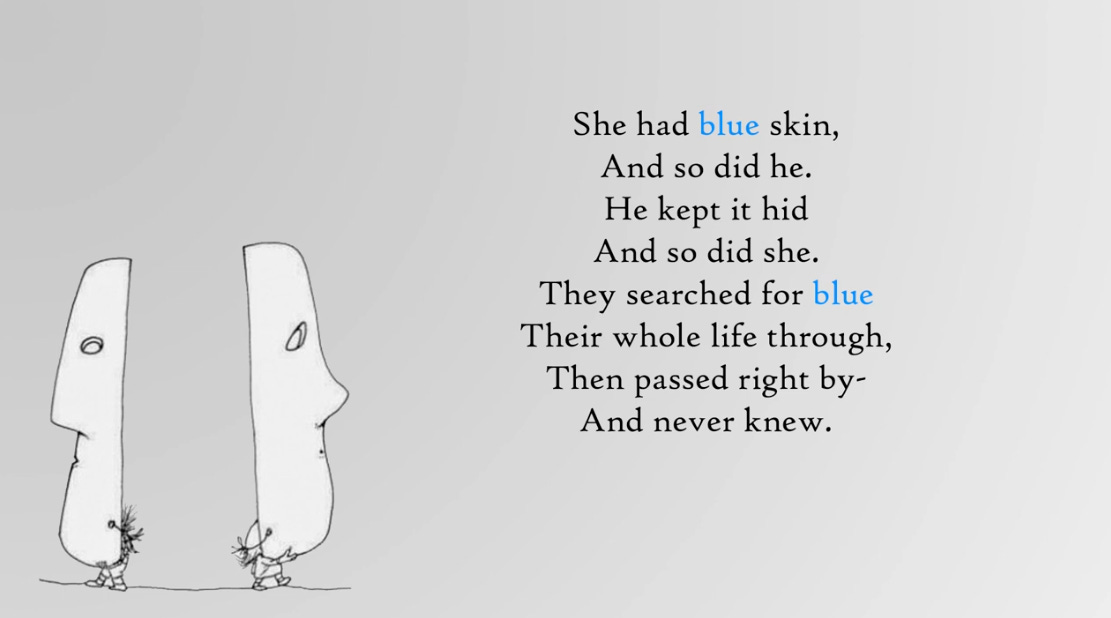
As I keep adapting and searching for ways to break those masking habits, I tend to use emotional proximity to decide when it’s safe to drop the mask with someone. If they’re like me, I really don’t want to miss the chance to connect on a real level. This is where I picture Shel Silverstein’s poem “Masks”—that’s the image in my mind where authenticity feels most essential. So now, I try not to lean into masking as much, and instead, I aim to be real—even if my sense of authenticity is still a work in progress.
My past couple of weeks have been high-stress. A lot of anxiety, mostly tied to work dynamics, relationships, and unanticipated responses from routine interactions.
I genuinely LOVE the team of spicy characters I work with daily, they are a breath of fresh air from previous work environment and cohesiveness experiences. There’s a *chef’s kiss* blend of personalities and skills that intuitively encourages each of us to thrive. Sure, there are anomalies, any new group has them, but there’s also communication, compassion, curiosity, and trust. It’s visible. It’s felt. Often. Even if a traumatized part of me fears I’m blind to some paranoid-induced drama, the answer is “this experience is real to me here and now, that’s unalterable regardless of fantasy of trauma.”
The hard part has come from more external elements. I was recently accused of disrespecting another staff member. I’ve asked for clear, specific examples, but the feedback seems to exist more in interpretation than in plain language.
I even had Mandi read the same exchange. Afterward, she told me I was crossing that line. When I asked her to point out what exactly crossed the line, she gave a response similar to my manager's: something vague, a sort of felt sense that doesn’t hold up under close reading.
The thing is, this isn't an incident. There are three separate situations that have occurred in a short span of time. Clearly, there’s something in my behavior contributing to these perceived conflicts, though I can’t see it. This isn’t an attempt to shelter myself of blame, I’m know I mess up. Screwing up is normal, I want them to be minor tho. To do that I need to understand how it happened so I can make better choices next time. Current there aren't any I can measure against.
Without clarity, my brain kicks into overdrive. I start scrutinizing every tiny detail, looking for something I already know I’m not wired to detect. It’s exhausting. And it leaves me with almost no capacity to be what people expect: “normal Joseph.”
Normal is relative, but when the mask is inactive my face is void of emotion (I guess) and that void is so startling to some that they interpret it as scorn or anger (still guessing). I know my mother will see it as “unhappy” when it is neither happy nor unhappy, it feels like static. She prefers the smile she knows of as “me,” and I can deliver that on command regardless of my inner hurricane.
I’m not bothered by that, basic psychology tells us that forcing a smile can release the same chemicals as a real one. Laugh on command ten times in a row, and by at least #7 you are truly laughing, and at #10 you might be busting a gut. Our meat suits have more control that we might prefer. I digress.
I become caught in the over-analysis of every word. I feel the absurdity of it. The frustration of grasping at nonsensical or complicated evidence. Meanwhile, I notice my face refusing to show emotion, almost like it’s on lockdown. I don’t want people to feel uncomfortable but my face refuses to do what I want when in this over-analysis state. Oh by the way, the bolded parts above are all separate experiences, happening at the same time, layered over each other.
I’ve learned how to quiet this storm, usually by isolating myself and stuffing all the logical gaps with mental duct tape until the obsession lets go, it just takes time. When it finally did get quiet today, and I could replay events in my mind, I noticed something unusual. A relationship between empathy and masking I hadn’t identified.
Keep in mind for a moment that I sense people’s emotions more than I care to admit. It sounds ridiculous even to me when i talk about it, at least audibly. But on a good day I have found methods to shield myself from to much/many. And then, unless the person is one of a few specific “types,” I end up feeling what they’re feeling when around me, talking to me on zoom/phone or whatever. Whether they realize in that moment they are excreting these things I don’t know, but I do know there are times it is not a conscious thing they understand about themselves.
What I was identifying was that masking, isn’t just about hiding my vulnerability. It’s also about projecting the emotions I want others to excrete or at least embody. Maybe it’s more of a dance or a co-regulation. There are times my voice, demeanor, attitude, and even walk will be part of the mask, all of me can be contributing. In a way I’m saying, “Feel this way, so I can feel that way.”
When the void of emotion occurs, they are then likely to scramble for answers. My manager kept reminding me, “we are having a friendly conversation.” And that is when it dawned on me that my masking was co-regulating their emotions, so that I could handle what they mirror back. Is that manipulation? Maybe technically. But the spirit of it isn’t malicious, it’s cooperative. At least, that’s how it feels to me.
That is it though. My ‘tism is protecting me from various angles of vulnerability. In the moment that i realized it was likely working that way. I pictured our Dane, Moose. He does the downward dog pose when we tell him “no” or scold him in unexpected times. Presenting himself almost as in a, “but I’m so cute, why would you be angry at this?” playful attitude. I see it and am almost always irritated by it, but now… it feels different. He is vulnerable at what might happen after, “NO!” and desperately wants to co-regulate to prevent his worst case scenario (which is trauma from some other slice of his life).

My understanding of the world seems to shift every few months anyway. Who knows, maybe next week I’ll realize it’s all just water molecules frozen while thinking about monsters.
How about you? Do you mask? Are you a chronic empathizer? Or do parts of you seem to ignore the rest of you entirely?
Tell me—I’m curious.