I find myself standing motionless between rows of colorful cereal boxes and canned goods. It’s a weeknight and the store is nearly empty, the polished floor reflecting an almost mirror-like version of this aisle. In the silence, broken only by a distant shopping cart wheel squeaking, I reach toward a box of oatmeal on impulse. My hand pauses on it, and I catch myself wondering: Why did I choose this one? The decision felt already made before I could even think, as if some part of me decided in advance and my conscious mind is only now catching up.
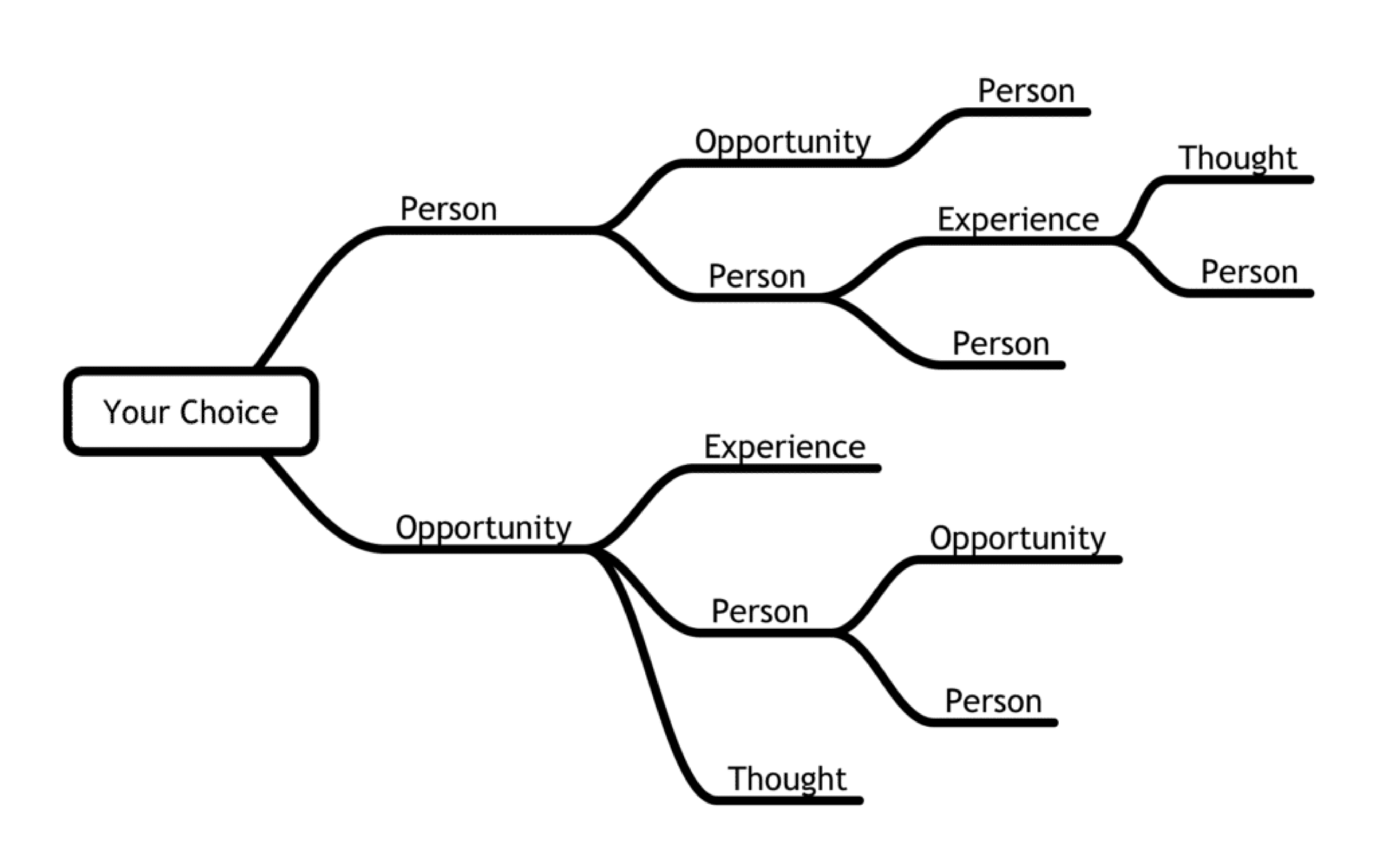
We like to imagine every choice is deliberate and rational, but research suggests otherwise – unconscious brain activity can determine our choices well before we’re aware of deciding [unsw.edu.au]. One experiment even found that researchers could predict a person’s choice 11 seconds before it entered conscious awareness [unsw.edu.au].
Standing here under neon aisle markers, fingers grazing the cardboard, I wonder how many of my life’s decisions were set in motion moments before I “decided,” quietly orchestrated by a hidden part of me.

Choices Before Reasoning
I blink and pull my hand back from the oatmeal, a gentle laugh escaping at the thought. In a way, my conscious mind often feels like a narrator who invents reasons for decisions after the fact – a storyteller explaining why I wanted the very thing I’ve already placed in my cart. The overhead speakers crackle and a friendly voice announces a “special on bakery bread, aisle 3”. I notice my feet almost start turning the cart toward the bakery before I halt. Was I even craving bread a minute ago? Probably not, but a simple announcement and the faint smell of fresh rolls now drifting through the air have primed my desire.
I’m reminded of something I once read: many decisions unfold without our awareness of their true influences; when we reflect, we tend to credit whatever we were conscious of at the time, unaware of the subtle biases and past cues that really guided us [brainworldmagazine.com].
In other words, I might tell myself I chose the oatmeal for its health benefits – a nice, logical explanation – but perhaps the real choice was made by a flash of memory (a childhood breakfast at grandma’s table) or a colorful “On Sale!” sticker that my eyes caught subconsciously. The conscious mind eagerly rationalizes, “Yes, of course, this makes sense,” all while the subconscious quietly smirks, having nudged us in the first place.
Pushing my cart along, I scan the hanging signs that name each aisle’s contents: Produce, Dairy, International Foods, Household Essentials. Each sign feels like a chapter title in the book of life’s myriad purposes.
How often have I marched down one path because a sign above it promised “success” or “security”, assuming that the label was the destination? Much like the neat categories in a grocery store, I used to think life’s purpose was a single, well-labeled pursuit – something you could locate by following the proper signs. Attention, shoppers: find your one true calling on aisle 7, third shelf on the right. If only it were that simple.
Shadows on the Wall of Purpose
Midway through the store, I linger beside a display of neon-orange sale tags fluttering under an AC vent. The bright signage draws my eye just as shiny goals once captivated my younger self. I recall being eighteen, rushing through aisles just like these, with a kind of incautious ambition.
“the meaning of purpose in my life has been evolving”
Back then, purpose meant achieving the big objectives I had set for myself – getting the right job, reaching the next milestone, checking off a preordained list like an efficient shopper. I was so certain of what I was after. Yet in hindsight, I wonder if I was like a shopper fixated on the packaging without understanding the contents.
In Plato’s allegory of the cave, prisoners live chained in a cave viewing only shadows on a wall, mistaking those shadows for reality because they’ve never seen the true objects casting them [wyzant.com]. Similarly, the “purpose” I chased in my youth now seems like a shadow – an image cast by societal expectations and my own limited perspective. I interpreted those shadows earnestly, never realizing there was a brighter world of meaning behind them.
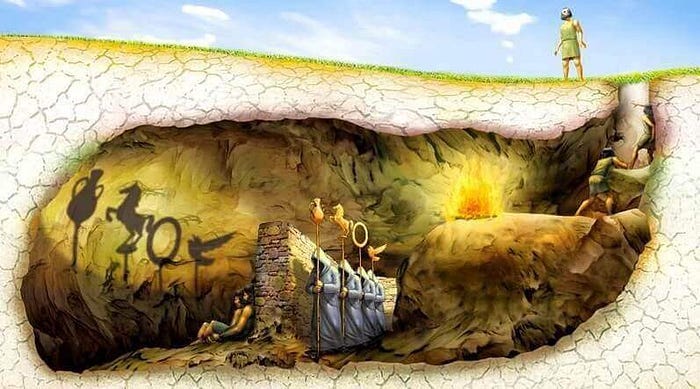
Much like those cave prisoners, I had my back turned to the light for a long time. I believed the metrics of success I’d been handed were the real thing, when in fact they were only silhouettes of true purpose. And stepping out of that cave was not easy. I still remember a pivotal moment – a personal cave exit of sorts – when important plans fell apart in my mid twenties.
Decisions to uproot my new family to where take them where I thought was my destiny was inadequately reciprocal; the future I’d painted in such detail suddenly crumbled. At the time I felt utterly lost, blinded by the light of a new reality much like Plato’s prisoner stumbling into the sun [wyzant.com]. But that painful experience forced me to confront what I truly cared about beyond the labels. It was as if I had been yanked out of a comfortable illusion. In the shock of that disappointment, I realized I’d been living in a world of shadows on the wall, pursuing a purpose defined more by others’ projections than by my own deeper values.
Slowly, as my eyes adjusted to the broader daylight of life beyond that narrow cave. I began to question what “purpose” really meant to me, not just what it was supposed to mean.
The store’s crackling intercom brings me back for a moment – “cleanup on aisle 5” echoes down the corridors. A staff member with a mop heads past me, and I smile at the ordinary metaphor: sometimes you have to clean up a spill, a mess you didn’t foresee, before you can move on.
In my life, I had to clean up the scattered pieces of my broken plans and in doing so, discovered new ingredients for purpose that I never expected.
Evolving Aisles, Evolving Purpose
As I continue shopping, I notice an interesting thing: the meaning of purpose in my life has been evolving, much like the changing products on these shelves over the years.
“The experience itself is the point – savoring the texture of each
moment, learning from it, allowing it to shape me.”
When I was a teen, trailing behind my parents in a store like this, I saw purpose as something grand and distant – a flashy dream to chase later, like a treat I’d grab once I had the freedom. In my twenties, purpose became more urgent and tangible: I felt I had to figure it out as if it were a single item on the top shelf that I must grab or else miss out. By my thirties, my perspective shifted again; purpose started to entwine with responsibility and relationships – it wasn’t just about my dream, but how I fit into a larger picture with family, community, and world.
I suspect I’m not alone in this evolving quest. Culturally, we almost expect young adults to wander and explore what matters to them, but by midlife we assume they should have “sorted this out” [greatergood.berkeley.edu]. I certainly internalized that pressure. I tried to sprint down a career aisle marked Purpose as if I had to beat some clock.
Yet here I am now, a little older, moving at a gentler pace and finally appreciating the richness of simply browsing. I’ve learned that life’s purpose isn’t a fixed target or a single product to pluck off the shelf. It’s more like the entire shopping trip – a series of experiences in different aisles, some planned, many unexpected.
I can now recall an inspiring quote from Eleanor Roosevelt that finally makes sense to me now: “The purpose of life is to live it, to taste experience to the utmost, to reach out eagerly and without fear for newer and richer experience.” [passiton.com]. In my younger years I might have skimmed past those words, too busy checking objectives off my list. But these days, I feel their truth in my bones.
The experience itself is the point – savoring the texture of each moment, learning from it, allowing it to shape me. Purpose, I’ve come to realize, is less a destination and more a direction, an orientation toward life that evolves as I do.
I turn into the produce section, greeted by a misty freshness and the vivid green of vegetables. There’s a small delight in selecting a ripe avocado, even if it wasn’t on my original list.
I no longer rush strictly by the list; I allow myself detours to discover things I didn’t know I needed. Likewise, I’ve grown to value the unplanned experiences in life – those detours from my rigid goals that ended up teaching me far more.
Seeing places I never expected to visit, striking up an unexpected friendship, pursuing a hobby purely for joy – these experiences initially seemed “off-objective,” yet they enriched my sense of meaning. They gave texture to my purpose that no checkbox on a goal list ever could. When I was solely outcome-focused, life felt like a narrow tunnel (or a dim cave). Shifting to an experience mindset expanded my world; life’s aisle widened, stocked with more variety than I had imagined. I’m not afraid of the twists and turns now.
As I gently place the avocado in my cart, I know even if it bruises or goes over-ripe, that’s okay – not every experiment yields a perfect result, but every experience adds flavor to the stew of a life lived fully.
Priming the Subconscious Mind
Near the end of my shopping route, I pause at a section with international spices and seasonings. The array of unfamiliar labels and exotic scents reminds me how exposure to new things subtly changes our tastes. A thought strikes me: just as my palate expands when I try new flavors, my mind’s palate expands when I expose it to new ideas and perspectives.
“I can shape what I’ll be drawn to next by choosing what I engage with now.”
Over the past few years, I’ve noticed a pattern in myself – whenever I become infatuated with a topic or immerse myself in a new passion, the world around me seems to sync up with that interest. When I was considering buying new car, I suddenly noticed that make, model, and style everywhere on my arduous commute.
When I started learning a bit about neuroscience, conversations and articles about the brain popped up constantly. It felt almost magical, as if by focusing on something, I conjured more of it into existence. In truth, this is a well-documented quirk of the mind: whatever you focus on, you’ll find [psychologytoday.com]. Psychologists call it the frequency illusion – once something is on your mind, you become extra attuned to it, and it seems to appear all around you (even though the world itself hasn’t changed) [psychologytoday.com]. My interests were effectively priming my subconscious to notice certain patterns and clues.
Realizing this, I see a deeper insight: if my subconscious is constantly scanning the environment and nudging me toward certain choices, then I can influence those future choices by preloading my subconscious with the right nourishment. Just as a steady diet of processed sugar will prime my body to crave more sweets, a steady diet of particular thoughts and experiences will prime my mind to gravitate toward those things.
I can shape what I’ll be drawn to next by choosing what I engage with now. The idea is both empowering and humbling. It means that to steer my life’s direction, I must tend to the undercurrents of my mind – those subtle exposures and habits that incubate below awareness. If I flood my days with doom-scrolling negative news, my subconscious may lead me to cynical, fearful decisions. But if I expose myself to uplifting, perspective-expanding material, my hidden mind will start tracing positive patterns.
We remember what we prime the mind to attend to [psychologytoday.com]. In practice, that might mean curating what I read, who I spend time with, and even the challenges I undertake, so that my automatic inclinations align more with my conscious values.
I think about the phrase “setting intentions” – a concept I used to find abstract – and realize it’s essentially a way to preload the mind with a direction. When I wake up and deliberately remind myself to look for kindness or to be open to learning, I’m training my subconscious to filter the day’s vast stimuli in a meaningful way.
Similarly, perspective-shifting experiences – like traveling, learning a new language, volunteering in an unfamiliar community – these are powerful because they refresh the inventory of ideas and feelings stocked in the subconscious pantry. They broaden the range of options my mind will consider when the next split-second decision arrives.
It’s a bit like rearranging the products on a shelf: what’s placed at eye level, within easy reach, will more likely end up in the cart.
Quiet Realizations at Checkout
Eventually, I make my way to the checkout lane, my cart about half-full. There’s no line at this hour. The cashier, a gentle older man with smiling eyes above his mask, begins scanning my items with soft beeps. I load cans and fruit onto the conveyor and notice in my haul a mix of the intentional and the impulsive. There’s the oatmeal I came for, yes – but also that avocado chosen on a whim, a loaf of the bakery bread (the very one whose announcement tempted me), a bar of dark chocolate I don’t recall grabbing (did I pick that up while lost in thought?!), and a jar of Cajun spices from a random aisle that piqued my curiosity.
It’s such a mundane little collection of groceries, yet it feels oddly revealing, like an archaeological sample of my mind’s workings tonight. Some choices were calculated, others instinctive. Some were influenced by external suggestions, others by inner curiosity. All of them, mine, in a sense – yet not entirely under the control of the rational “me” who is now observing them.
As the cashier cheerfully wishes me a good night, I step away from the register with my bags and a lighter heart. The doors slide open and a gentle breeze of cool night air greets me. I pause for a moment just outside the store, the door should carry a “Open When You Need It” sign, and reflect on the quiet revelations of this simple grocery trip.
If decisions are indeed often made in the shadows of the subconscious moments before our conscious mind catches on, then living a purposeful life might be less about forcefully willing each choice and more about cultivating the soil from which those choices sprout.
I realize now that to shape my decisions, I must shape what feeds my mind when I’m not “deciding.” It means paying attention to what I let in: the books, the conversations, the small daily routines – all the subtle messages and experiences that drip into the subconscious and settle there. By curating those inputs with care and intention, I’m effectively stocking my inner shelves with the kind of ingredients that will make wholesome meals later, when the time comes to choose.
Walking to my car, I allow myself a smile at the thought that life is a lot like this shopping experience. There will always be more options than one can see at first glance, aisles we didn’t know we’d wander down, unexpected announcements that draw our attention, messes to clean up, and little joys to discover. Our sense of purpose, too, is not a static thing sitting on one shelf – it’s something we continually assemble from the experiences we collect and the meanings we ascribe to them.
I place the groceries in my trunk, feeling the coolness of the night and an inner calm. There’s no grand, loud conclusion waiting for me; instead, there’s a gentle understanding that has been building quietly, like the soft music that plays overhead in the store without one really noticing. Purpose is evolving and alive, guided by both conscious aims and subconscious currents.
By mindfully preloading my subconscious with exposure to what inspires and enlightens me (us), by setting intentions and embracing perspective-shifting experiences, I am, in effect, choosing in advance what kind of life I’ll find a rationalization for later. Perhaps, any simple errand can became a soulful one. I feel as though I’ve been shopping for insight as much as for groceries.
In the reflective stillness of a nearly empty parking lot, I tuck away this quiet realization: the deeper part of me – the part that decides before deciding – is listening and learning all the time. It pays attention to the books I read, the ideas I entertain, the passions I pursue. It notices what perspective I carry when I walk through the world’s aisles. And if I take care to nourish that deeper self with curiosity, kindness, and rich experiences, then when I’m faced with life’s myriad choices, big or small, my subconscious will be a wise guide, gently steering me toward a purpose that I don’t just think about, but quietly, truly live.
Sources: The insights in this essay draw on research about subconscious decision-making, such as a UNSW study showing that unconscious brain activity precedes conscious choices [unsw.edu.au] [unsw.edu.au], and psychologist John Bargh’s findings that we are often unaware of the real influences on our decisions [brainworldmagazine.com]. The metaphor of Plato’s Cave illustrates how our perceived purpose can be an illusion of deeper reality [wyzant.com]. The evolving nature of purpose over the lifespan is discussed in developmental research [greatergood.berkeley.edu]. The shift from goal-orientation to valuing experience echoes Eleanor Roosevelt’s advice to "taste experience to the utmost” [passiton.com]. Finally, the phenomenon that we notice what we’re primed to see is known as the frequency illusion [psychologytoday.com], suggesting that by focusing our attention and exposing ourselves to new perspectives, we can “preload” our subconscious to shape our future choices.
Author’s note: This article has been in the works for well over a month. I knew what I wanted to say and lacked the method to tell the story. I made the effort of pulling together information, stitching the ideas, and trying to tell the story of a grocery store experience that is realistic but not an actual experiential account. A couple of reworks with AI got me over the finish line in such an elegant way that I am unashamed to say I received that help. I often feel shame for using the assistance, but is a painter any less an artist if they haven’t made their own canvas, or crushed ingredients into their own paint? I brought an experience and a lesson and a language model helped me give it breath.